Background to the project
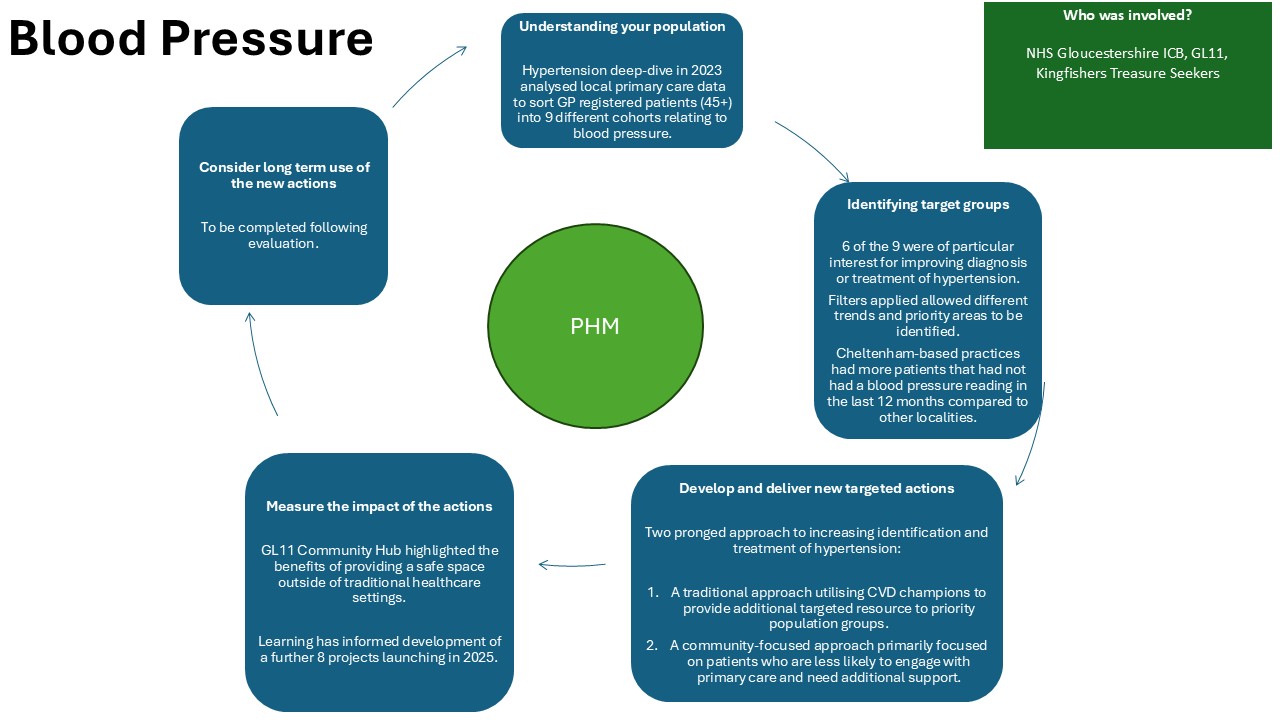
A hypertension deep-dive analysis was completed in 2023 which analysed local primary care data to sort GP-registered patients (aged 45+) into 9 different cohorts relating to blood pressure. This was based on a similar piece of analysis completed by BNSSG ICB.
Who was involved?
NHS Gloucestershire ICB, GL11, Kingfisher Treasure Seekers.
Using data to understand your population
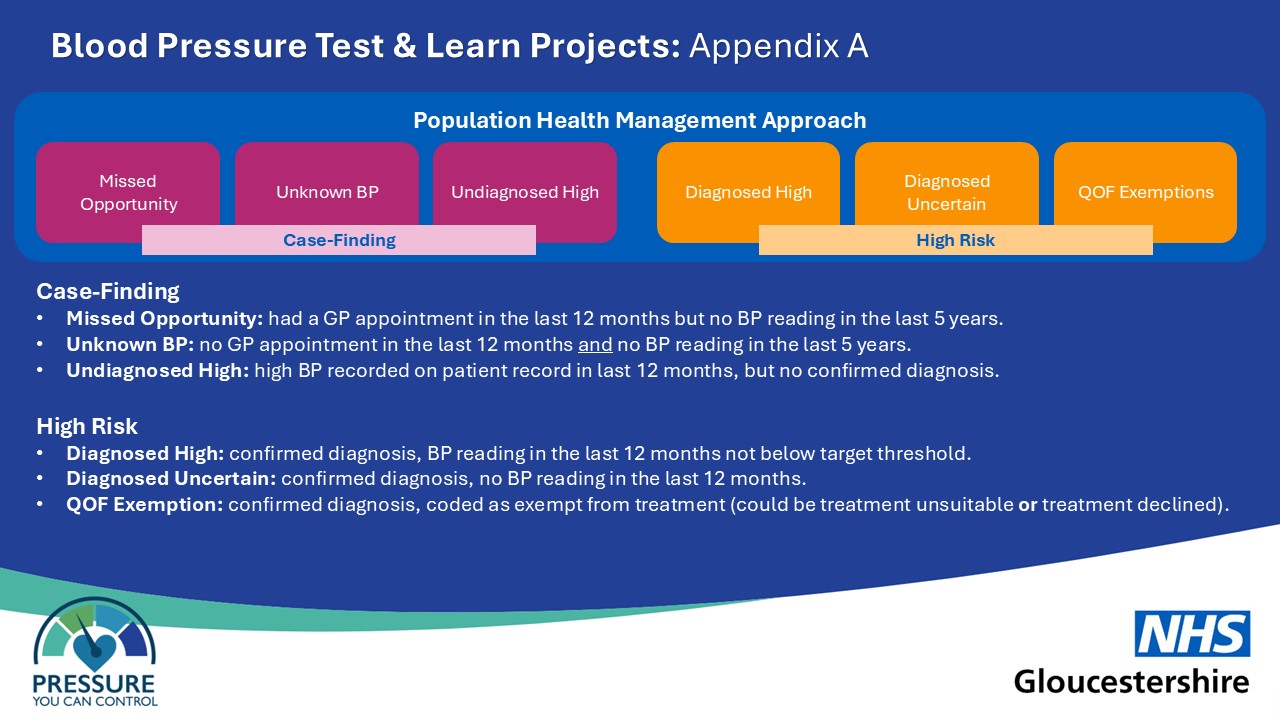
Six of the cohorts identified in the hypertension deep-dive were of particular interest for improving the diagnosis or treatment of hypertension in Gloucestershire. These were split into ‘case-finding’ and ‘high risk’ groups (see appendix A below).
Identifying target groups
The local primary care data was filtered by PCN, practice and other patient demographics (e.g. age, gender, ethnicity and deprivation) to identify areas or population groups that we particularly needed to target. This allowed us to see several different trends and priority areas to focus on. Cheltenham-based practices had more patients that had not had a blood pressure reading in the last 12 months compared to other localities, whereas patients living in Core 20 areas were less likely to be targeted.
Develop and deliver new targeted actions
Locally we have a two-pronged approach to increasing identification and treatment of hypertension:
1: A traditional approach utilising CVD champions to provide additional targeted resource to priority population groups
2: A community focused approach primarily targeting patients who are less likely to engage with primary care and need additional support.
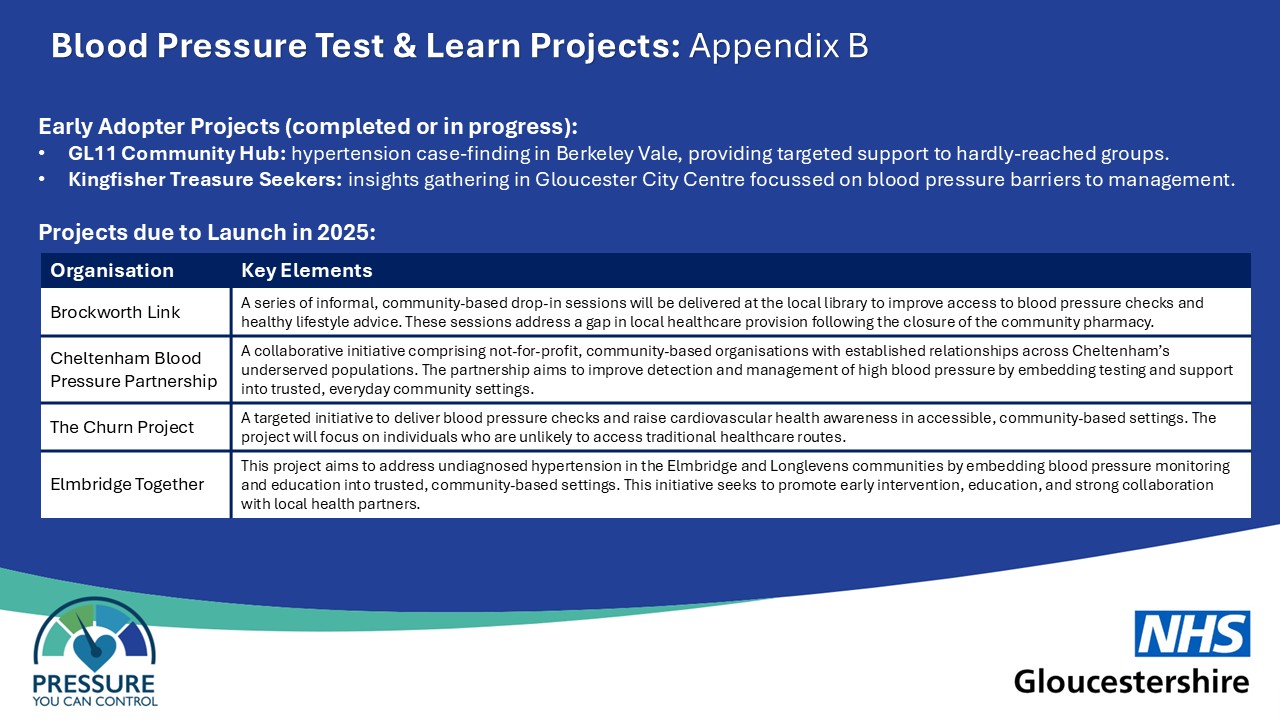
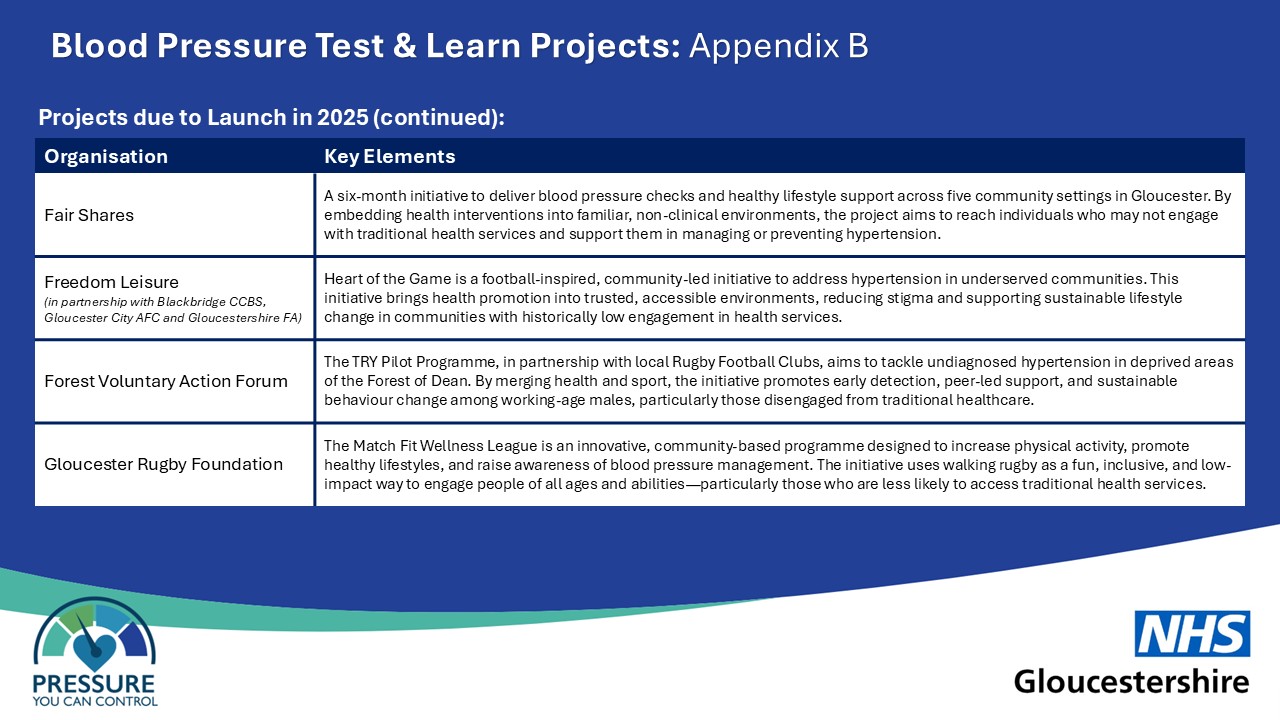
As part of the community focused approach we have co-designed 10 different projects with the voluntary sector, informed by the findings from the deep-dive analysis (see appendix B below).
Measure the impact of the actions
GL11 Community Hub highlighted the benefits of providing a safe space outside of traditional healthcare settings to get tested and receive 1:1 support to help with behaviour changes. Kingfisher Treasure Seekers demonstrated the importance of language when promoting the risks of hypertension and how to prevent it. Learning from these early adopter projects has informed development of a further 8 projects launching in 2025. A local evaluation will be completed in 2026/27 once all 10 projects have closed to understand the impact these projects have had on our community.
Consider long term use of the new actions
This page will be updated following the local evaluation planned for 2026/27.