
Background to the project
The aim of this project is to reduce the incidence of falls and enable living well at home for longer, among frail adults over the age of 65 in North and South Gloucester PCN.
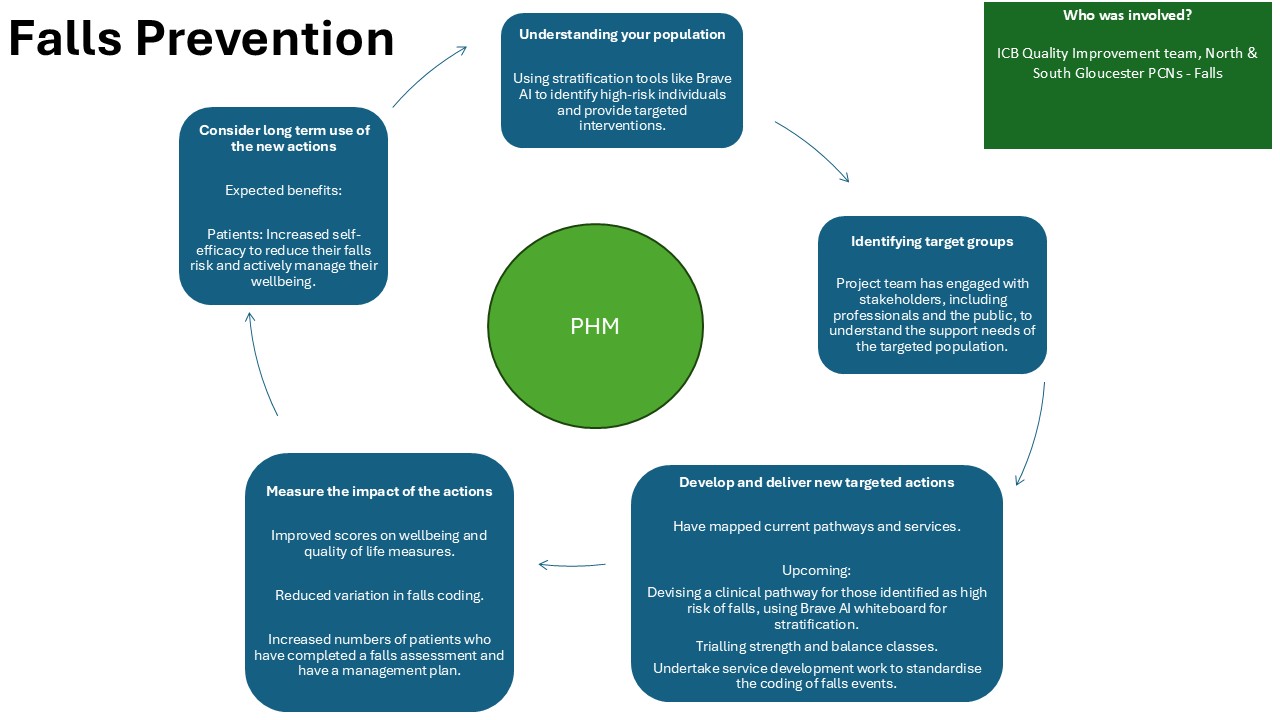
Who was involved?
ICB Quality Improvement team, North and South Gloucester PCNs – Falls
Using data to understand your population
Population segmentation tools like Brave AI can identify high-risk individuals and provide targeted interventions. This approach ensures that resources are allocated effectively and those most in need receive the appropriate support. Additionally, standardising the coding of falls events allows for accurate tracking and management of the population.
Identifying target groups
The project team has engaged with stakeholders, includng professionals and the public, to understand the support needs of the targeted population.
Develop and deliver new targeted actions
The project team have commenced mapping current pathways and services for falls management to identify gaps and areas for improvement. Upcoming actions are:
- Devising a clinical pathway for those identified as high risk of falls, using Brave AI whiteboard for stratification.
- Undertake service development work to standardise the coding of falls events, produce and maintain a self-management resource for patients and conduct personalised falls risk assessments by specialist practitioners for those with the highest risk.
- A trial of strength and balance classes, both in-person and virtual, will be offered to the target population.
Measure the impact of the actions
This will be done by measuring the following:
- Improved scores on wellbeing and quality of life measures
- Reduced variation in falls coding
- Increased numbers of patients who have completed a falls assessment and have a management plan.
Consider long term use of the new actions
The project is expected to bring the following benefits:
- For patients: Increased self-efficacy to reduce their falls risk and actively manage their wellbeing. Those at high risk of falls will have a personalised falls management plan.
- For Primary Care: Identifying people at risk of falls and providing proactive support will become business as usual, using a PHM approach and the virtual whiteboard tool. A clear pathway will be established to support people identified at high risk of falls.
- For the System: Reduced attendance at A&E and reduced ambulance call outs, leading to a more efficient use of healthcare resources, reduced variation in treatment approaches in the network will give a more equitable service for patients.